
The story so far
In July 2024, Bury Council’s Planning Control Committee gave the green light to our ambitious plans for Prestwich, including a new library, retail units, a market hall, community spaces, attractive green public areas, a travel hub and new homes.
The regeneration is already taking shape, with construction of the new £14 million travel hub progressing well and on track for completion in summer 2026.
Your Prestwich has now secured £6.8 million from the Greater Manchester Good Growth Fund, which means that the next phase can move forward. We’ve submitted a planning application to Bury Council, which builds on the outline planning consent we have in place.
To pave the way for the next phase of the village’s regeneration, the demolition of the Longfield Centre is set to begin by early August.
Find out more about the demolition of the Longfield Centre here.
Alternatively, explore the plans for the new village centre below, check the latest answered questions at the bottom of this page, or visit our FAQ page for more details.
Masterplan
Since the outline plans were approved, we’ve been refining the masterplan to make the most of the site.
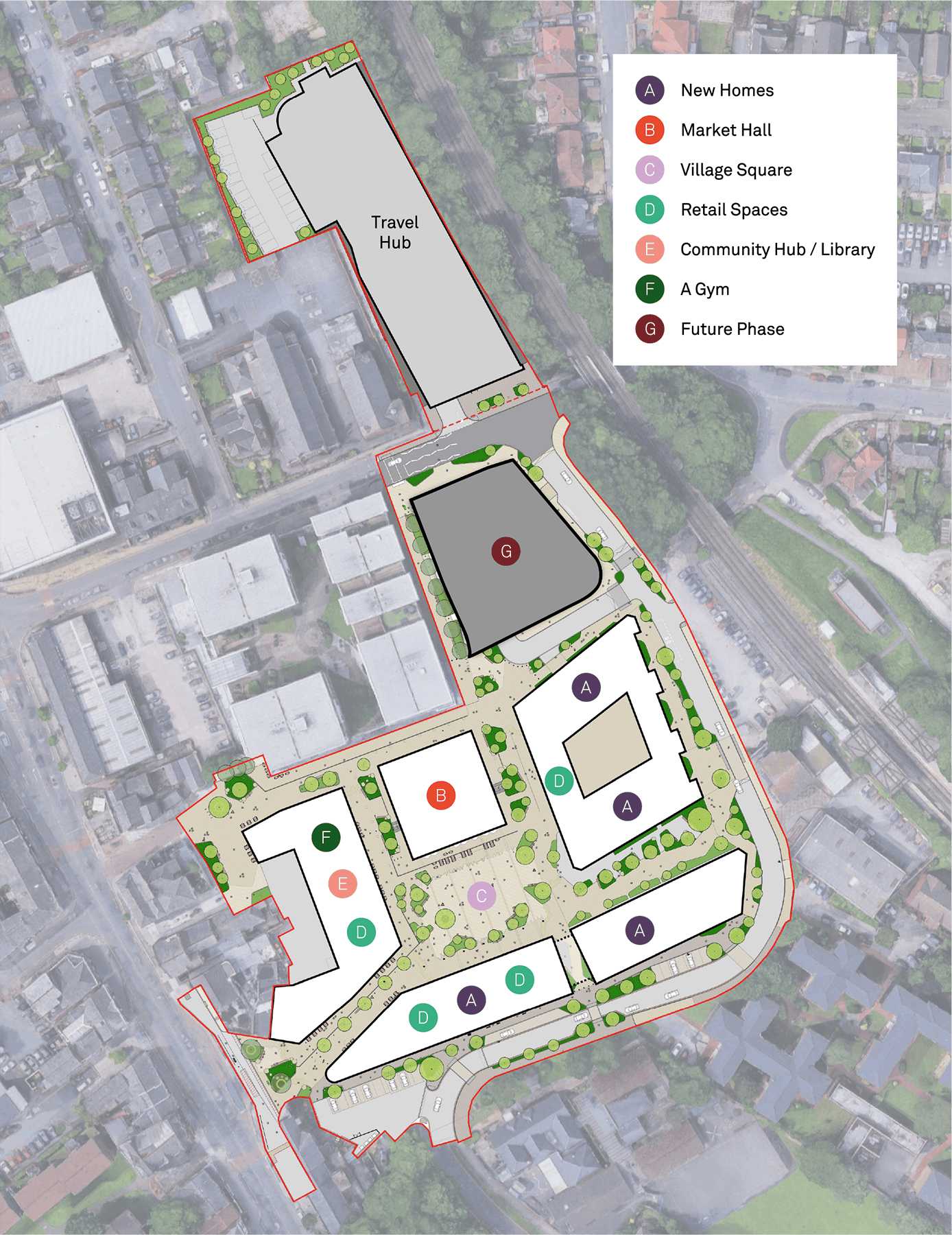
The masterplan has been shaped using feedback from the local community on what you want to see for Prestwich in the future.
The plans include:
The plans in
detail
Here’s a summary of updates since we received outline planning permission in 2024.

New Homes
We’ve increased the number of homes to 248 by merging two of the buildings, but keeping them the same height and retaining pedestrian links.

Community Hub
The community hub will feature a library with flexible community spaces and independent leisure and retail businesses.

Strong Connections
We’re maintaining and improving a strong connection to public transport offers, such as the tram stop and local bus links, to provide a warm welcome to the village.

Health Centre
We’ve been working closely with our NHS partners to help shape a joint service offer across Prestwich that will deliver modern, fit for the future health facilities. Whilst this part of the project is still in development, there will be no change to existing service provision and patients will be able to benefit from the wider improvements. Redevelopment of the NHS site will be delivered at a time that works best for them.

Green Space
Plenty of green spaces, trees and places to wander, relax and sit across the village centre.
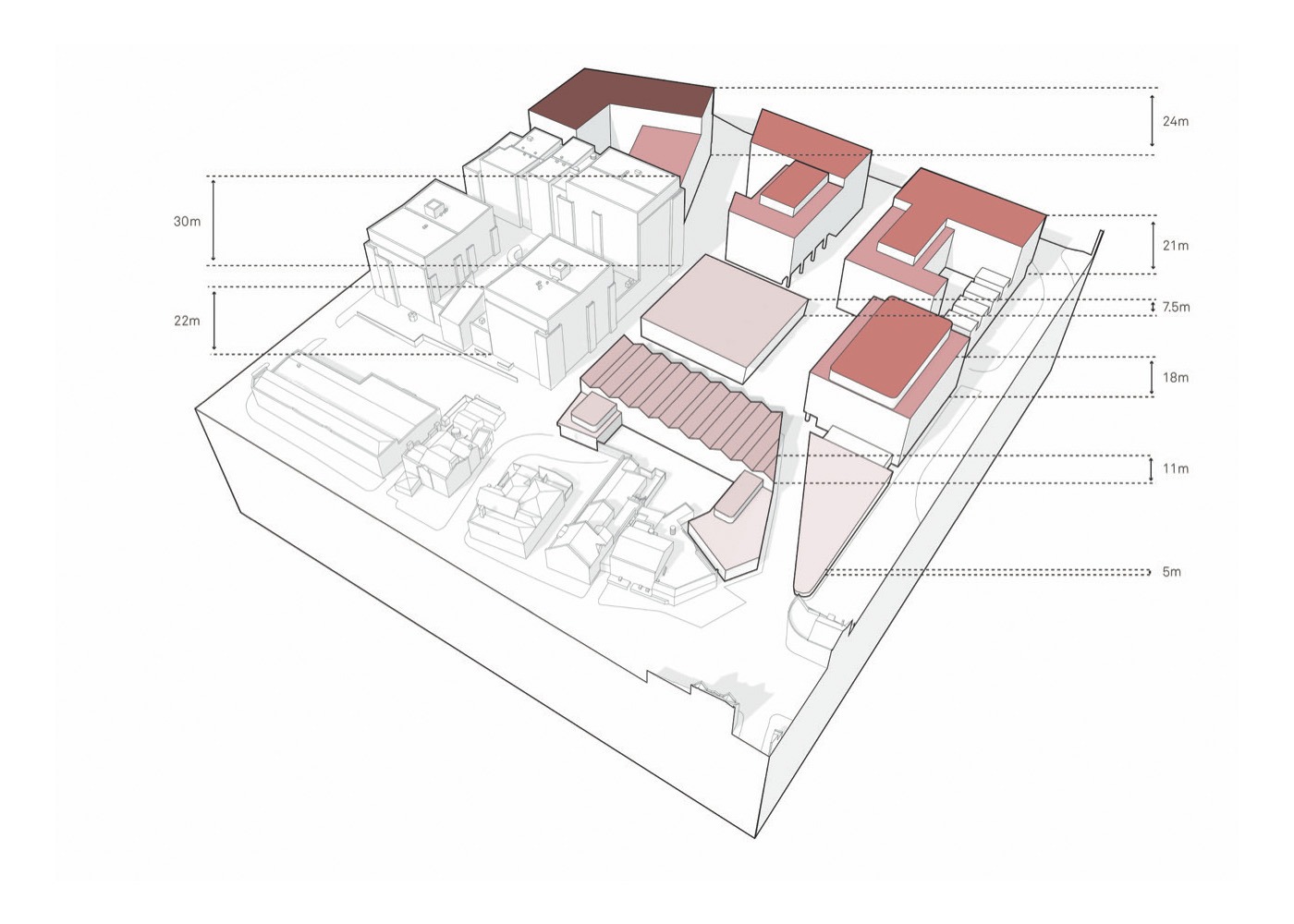
Original 2024 Masterplan
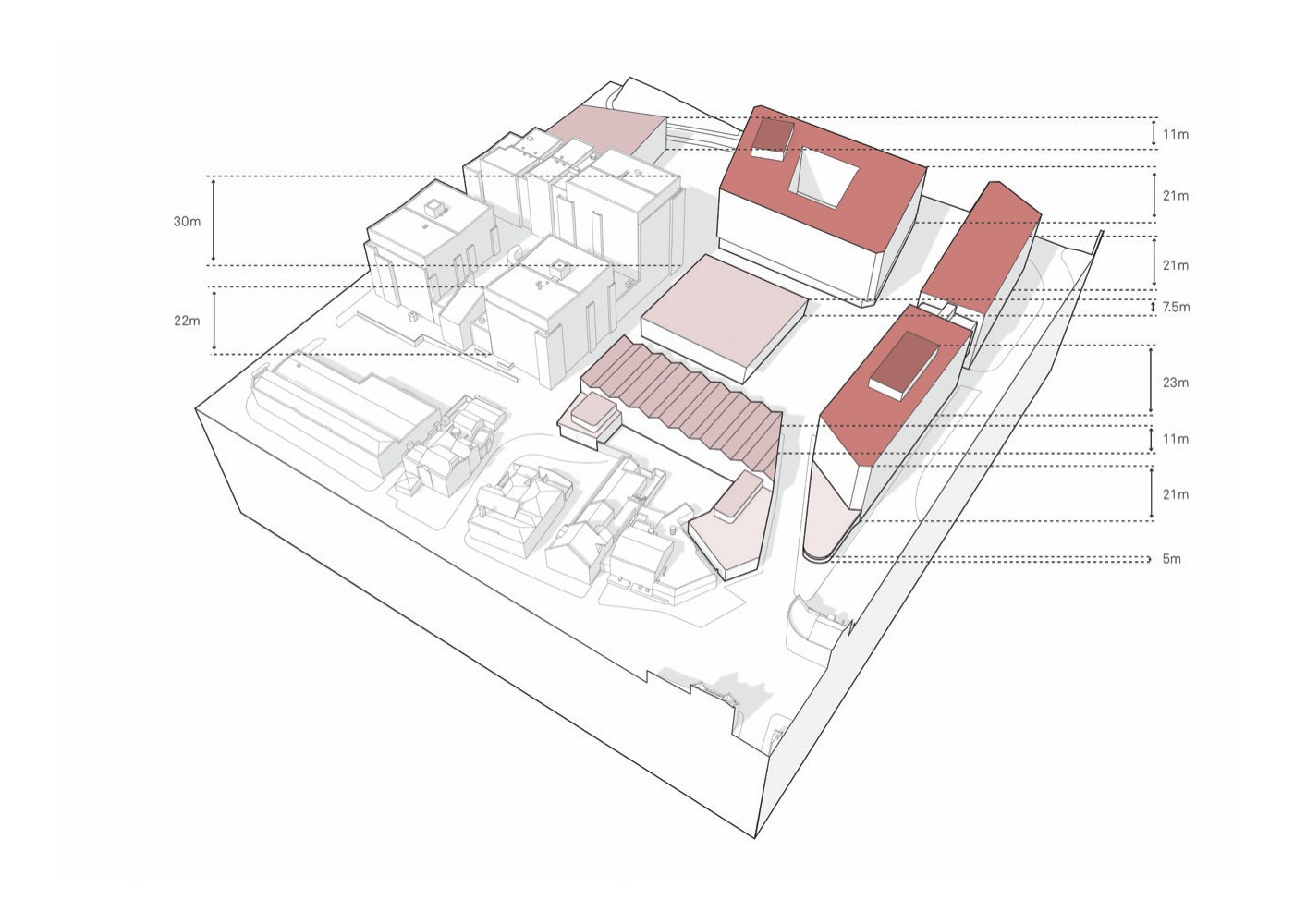
Updated 2026 Masterplan
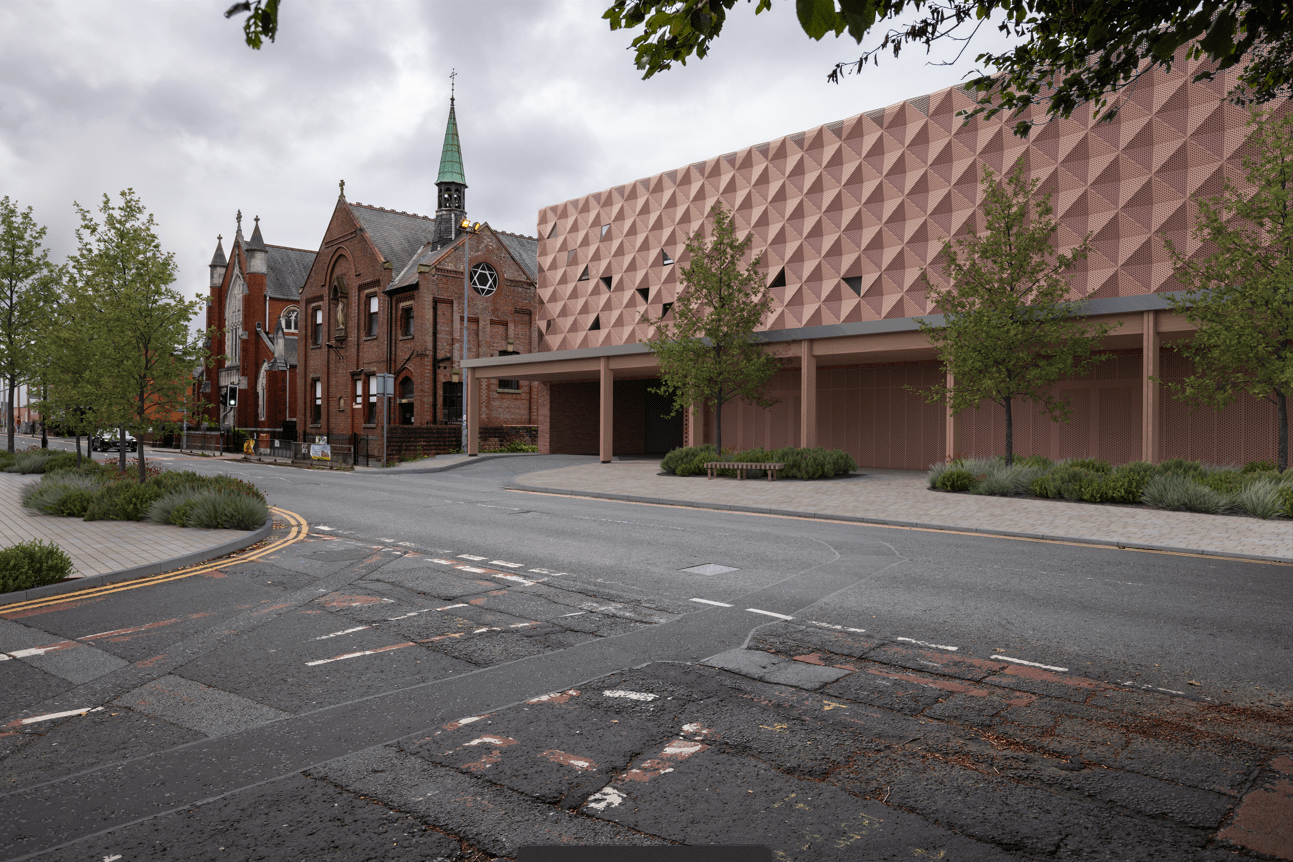
Phase 1:
Travel Hub
2024-2026
Construction of the new travel hub is progressing well with completion expected in summer 2026. This first phase will replace the existing car park off Fairfax Road and will provide over 301 parking spaces, including electric vehicle charging points and accessible bays, alongside extensive cycle storage.
Frequently
asked questions
Are the buildings now taller than previously proposed?
Although the retail and community hub building was identified as being 4-storeys as part of the original hybrid planning permission, its height would have been approximately 20.7m (to the top of plant screen).
The new apartment block in this location is 23.5m (to the top of plant screen) and 20.8m (not including plant screen). However, the increase in height is visually mitigated by the reduced depth of the new building. The consented retail and community hub was circa 26m wide, while the new apartment block in this location is 17m wide.
How does the design respond to Prestwich’s character?
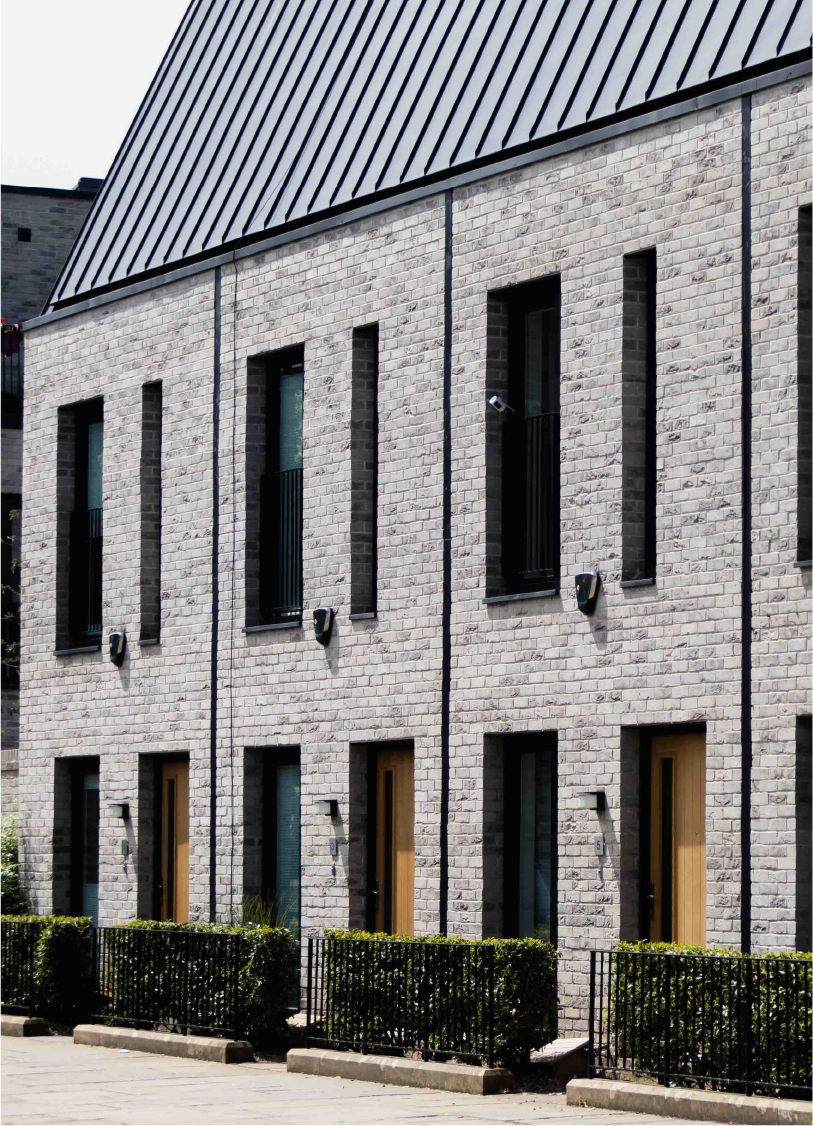
The design has been directly informed by a detailed study of the character, materials and architecture of the surrounding area. The buildings use brick as their primary material, drawing on the rich tradition of brick detailing found across Prestwich village. Textured brickwork, pigmented concrete and coloured metalwork are used to add depth and variety to the facades.
The retail and community hub has been designed to reflect the two-storey pitched-roof buildings found between Bury New Road and Poppythorn Lane, interpreted in a contemporary way.
The Market Hall uses terracotta cladding alongside large areas of glazing, designed to complement the surrounding palette of warm tones.
Can existing heritage features (e.g. the Longfield Centre shield) be retained?
The intention is to retain features like the Longfield Centre shield where it is practical to do so. This will depend on the material and condition of individual items and will be confirmed once the demolition contractor is on site.
A heritage exhibition relating to the Longfield Centre has been moved to Bury Arts Museum.
How was future parking demand evaluated, and what does this show about whether there will be enough parking for both residents and visitors?
Parking demand was assessed using the same approach approved as part of the original planning permission, based on actual usage data from the car parks that previously served the site.
There will be 347 parking spaces in total. The majority (301 spaces) will be provided in the new Travel Hub, which is currently under construction and expected to open in Summer 2026. A further 46 spaces will be provided on-street and within the development itself. Accessible parking is well distributed around the village centre.
Parking provision for the new homes has been retained at 42%, which is the same as that approved as part of the original hybrid planning permission. Bury Council’s parking standards generally require around 6% to be disabled parking spaces. 20 of the 46 on-plot/on-street spaces are disabled bays (43%), and 15 of the 301 Travel Hub spaces are disabled bays (5%).
In total, 35 of the 347 bays will be disabled bays, a ratio of 10%, which exceeds the Council’s requirement. Twenty-eight spaces in the Travel Hub will have electric vehicle chargers, with the infrastructure in place to add more in the future.
Why is there an emphasis on Active Travel?
Promoting walking and cycling is a priority for both the Government and Bury Council. The development has been designed to support this, with a network of pedestrian and cycle-friendly streets connecting the village centre, a new public square at the heart of the scheme, and 216 cycle parking spaces. A Framework Travel Plan has been submitted with the planning application, setting out the sustainable transport measures proposed.
The village centre is also located on the tram and bus network, meaning sustainable travel will be an easy choice.
We know travel habits won’t change overnight, but by creating the right environment, we can help more people choose greener, healthier ways to get around. This benefits you, the planet, and future generations.
What will the impact be on congestion?
We anticipate that the development will not have a greater impact on traffic than the scheme that was originally approved. Although the number of apartments has increased from 210 to 248, this is expected to generate slightly fewer vehicle trips than the original scheme. This is primarily because the revised proposal comprises apartments only, whereas the earlier plans included houses. Houses typically generate more vehicle trips as they tend to accommodate more occupiers who are more likely to have access to one or more cars.
Vehicle access within the village centre will also be managed by removable bollards to reduce through-traffic.
Will the increase in new homes affect the capacity of the Metrolink?
Any requirements to improve or contribute to local transport services, including the Metrolink, will be discussed and agreed with the Council during the determination of the planning application. Transport for Greater Manchester is a consultee on the application.
How many retail units are proposed and what size will they be?
There will be approximately 2,100 sqm of retail and commercial space spread across the village centre. This includes three ground floor commercial units in the apartment building to the south (Plot AD) totalling 557 sqm; 500 sqm of retail space in the retail and community hub (Plot B); a Market Hall (Plot C) with 210 sqm of retail and 380 sqm of food, drink and takeaway space; and 456 sqm of ground floor commercial space in the apartment building to the east (Plot E).
The retail units are designed to create active frontages at ground floor level, bringing life and footfall to the new streets and the village square.
Will units be affordable and prioritised for independent businesses?
Following feedback from the previous consultation, where residents asked to prioritise attracting local and independent businesses, Bury Council is continuing to engage with tenants that occupied the Longfield Centre about their plans for the future and their interest in being part of the scheme. The approach to setting rents for retail units is still under discussion and the final strategy is yet to be confirmed.
Is a bank proposed?
There are no plans for a bank as part of the development, but there is the potential for a pop-up banking hub to be located within the library.
How can businesses register interest in retail units?
What facilities will the gym include (e.g. swimming pool), and who will operate it?
A gymnasium of approximately 518 sqm is proposed as part of the retail and community hub (Plot B). Details of what facilities it will include and who will run it are not yet confirmed. However, the facilities will not include a swimming pool, due to size restrictions.
What is the vision for the Market Hall? Food vs retail mix? Daytime vs evening economy?
The Market Hall is designed as a single storey building at the heart of the village square, with approximately 590 sqm of floorspace. It will include a mix of food and drink operators, alongside space for retailers.
The building has been designed with large glass frontages to create an open, welcoming feel and a strong visual connection with the village square.
The Market Hall is intended to be open into the evening, to support Prestwich’s night-time economy.
Will there be public toilets in the Market Hall?
Yes. The Market Hall includes customer toilets. Public toilets will also be available in the library.
Has the retail and community hub reduced in size compared to the previous consent?
No – the Retail & Community Hub has more than doubled. The Retail & Community Hub will provide a brand-new library alongside flexible spaces for community use.
What is included in the retail and community hub?
The Retail & Community Hub building will include a new library, retail space and a gymnasium.
The building also includes community areas designed to host activities, meetings, and events for the local community.
Why is the library being relocated to the first floor? How will accessibility be addressed? Will children’s provision remain on the ground floor?
The library is spread across both the ground and first floors. Locating the main library space on the first floor allows the ground floor to include active retail and leisure uses, which helps to create footfall and a vibrant street-level environment during the day and into the evening.
The building will be fully accessible, including lift access to the first floor. Children’s provision – including a play area and children’s books – will remain on the ground floor.
Will public toilets continue to be available in the library?
Yes
Has green space been reduced from earlier proposals?
No. The village square has grown significantly from 1,200 sqm in the original proposal to approximately 1,700 sqm, which is an increase of around 500 sqm. Across the wider development, the amount of public space has either stayed the same or increased.
The square has been designed as a flexible community space, with areas of pocket gardens, planting and room for events such as markets, outdoor cinema and art exhibitions. Green roofs are also proposed on two of the buildings.
A total of 120 new trees will be planted across the development, with species chosen for seasonal variety, colour and biodiversity value.
What will happen to the existing trees around the Longfield Centre?
Some existing trees will need to be removed to make way for the development. Across the whole site, a total of 61 trees will be removed. None of these are the highest-quality category of tree, and none are protected by Tree Preservation Orders.
The trees in the car park area cannot be kept in place or transplanted, but they will be replaced with new semi-mature trees.
In total, 120 new trees will be planted – a ratio of two new trees for every one removed, in line with planning policy. The replacement trees include a mix of native and ornamental species, selected for their shape, seasonal interest and contribution to biodiversity.
Over time, the new planting is expected to fully re-establish the tree cover on the site, with improvements to species diversity and overall quality. Working with City of Trees, Bury Council has planted over 40,000 tress in Bury Borough, including 40 standard trees, 180 whips and an orchard in nearby St Mary’s Park.
Bury Council is also working with local charities to ensure that birds currently residing at the Longfield Centre are safely managed before demolition begins, including checks to confirm that no active nests are present prior to any removal works.
Why has the number of homes increased to 248 and what evidence supports this level of housing?
The increase to 248 homes has been made possible through design changes to the masterplan. Previous plans proposed up to 210 homes across three separate apartment buildings. The updated design combines these into two buildings, allowing the total number of homes to rise to 248.
This increase has enabled the project to secure £6.8 million from the Greater Manchester Good Growth Fund, designed to help create an inclusive economy where no one and no place is left behind, part of a wider programme led by the Greater Manchester Combined Authority (GMCA). This funding plays a vital role in enabling the regeneration to go ahead.
This funding not only supports the delivery of new homes but also enables investment in enhanced community facilities, such as the expanded library and village square, helping to create a vibrant and welcoming centre for everyone.
There is also clear evidence of local housing need. Bury Council data (November 2025) shows only 4.3 years of housing land supply (below the required five-year level) highlighting the importance of delivering new homes in sustainable, well-connected locations like Prestwich.
Why is the scheme rental-only apartments rather than a mix of town house and apartments?
By focusing on rental apartments, the development has unlocked funding from the Greater Manchester Good Growth Fund, which has been instrumental in making the wider regeneration of Prestwich village possible.
Townhouses were explored at the very early stages of the project, but they were not included in the approved hybrid planning application in 2024. A townhouse-led approach would have resulted in more expensive and fewer homes. The new plans will provide more accessible housing options, helping to meet local needs.
There is also strong demand for homes within easy reach of the village centre. These new apartments will help meet that demand, offering high-quality, accessible homes for a range of people, including those who want to remain in Prestwich and enjoy the convenience of being close to shops, services, amenities, and community spaces. By providing well-managed, professionally maintained apartments, the development will support a sustainable, thriving community and ensure that the regeneration delivers benefits for both current and future residents.
A single build-to-rent operator will professionally manage the homes, ensuring consistent standards and reducing long-term maintenance risks.
What are the benefits of providing apartments?
Bury Council’s Housing Strategy recognises that young people are increasingly priced out of the communities they grew up in, particularly where housing choices are limited to traditional family homes.
Modern apartments in town centres are specifically identified as part of the solution because they:
• Provide smaller, more affordable homes suited to first time buyers, renters and young professionals
• Are located close to public transport, jobs, shops and services, reducing living costs and car dependence
• Make better use of brownfield land, protecting surrounding neighbourhoods and green spaces
By delivering apartments in Prestwich Village, the regeneration creates opportunities for young people who want to:
• Live independently for the first time
• Stay connected to family, friends and community networks
• Build careers locally or commute easily into Bury or Manchester
Without this kind of housing, the strategy is clear that young people are more likely to be forced to leave the area entirely, weakening community continuity and local economies. Apartments therefore play a key role in ensuring Prestwich remains a place where people can grow up, move out, and still stay local rather than having to move away.